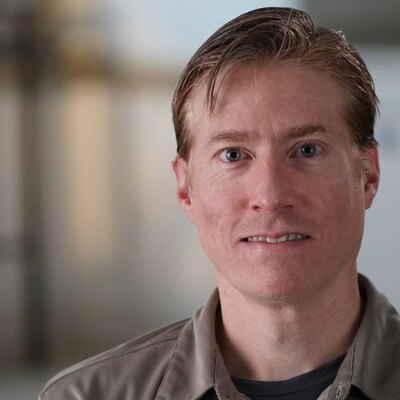
Mike Davies Keynote
Director, Intel Neuromorphic Computing Lab
Keynote — title to be announced
Mike Davies leads Intel's neuromorphic computing research, including the Loihi brain-inspired research chips for efficient, event-based AI at the edge.

Guido de Croon Invited
Full Professor, Micro Air Vehicle Laboratory, Delft University of Technology
Neuromorphic AI for Small Drones
The Micro Air Vehicle Laboratory (MAVLab) of TU Delft aims at the early demonstration of novel AI concepts on tiny flying robots, studying how neuromorphic vision and control can make small drones more autonomous and energy-efficient.
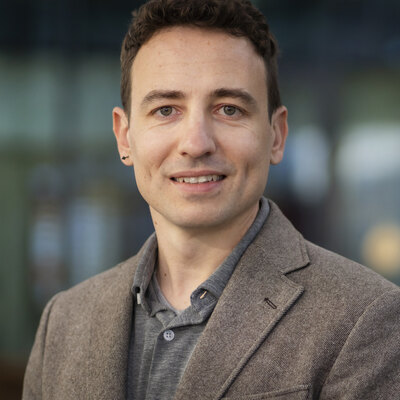
Federico Corradi Host
Associate Professor, TU/e Casimir Institute
AI as Co-designer for the Next Generation of Neuromorphic Chips
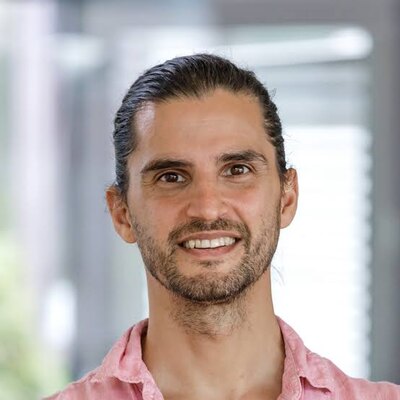
Emre Neftci Keynote
Professor, RWTH Aachen University; Institute Director, Forschungszentrum Jülich
Neuromorphic Principles in Generative AI
Emre Neftci received his MSc degree in physics from EPFL in Switzerland, and his Ph.D. in 2010 at the Institute of Neuroinformatics at the University of Zurich and ETH Zurich. He is currently an institute director at the Jülich Research Centre and Professor at RWTH Aachen. His current research explores the bridges between neuroscience and machine learning, with a focus on the theoretical and computational modeling of learning algorithms that are best suited to neuromorphic hardware and non-von Neumann computing architectures.
Marcel van Gerven Invited
Professor of Artificial Cognitive Systems, Donders Institute, Radboud University
From Neurons to Robots: Adaptive Intelligence Under Real-World Constraints
Next-generation physical AI systems must close the loop between sensing, reasoning, and control. Effective control in the real world depends on adaptation, and on building systems that stay resilient under uncertainty while operating within tight resource limits. In this talk, I will first define what an intelligent system is, and show how artificial and natural intelligence can be described in a unified way through the lens of dynamical systems. I will then argue that adaptation is essential to any intelligent system, and that it operates through two nested loops: a fast inner loop that tunes behavior in real time, and a slow outer loop that reshapes the system's structure over successive generations. Building on this, I will make the case for resilient systems that keep functioning despite noise, faults, and changing conditions, all within strict budgets for energy, compute, and memory. Finally, I will describe our recent work in this space, including new algorithms for control and learning that can operate under uncertain, dynamic environments, and our efforts to build brain-inspired neuromorphic systems that perform learning, inference, and control on low-power physical devices.
Panel Session Panel
Physical AI with Industrial Partners
A moderated discussion with industry leaders on the road from brain-inspired compute to deployable physical AI in automation, robotics, and high-tech systems. Panel members to be announced.